
· Pro Rend Sussex team
Lime render and silicone render can both protect and improve an exterior wall, but they are different types of system.
Lime render is commonly associated with traditional masonry and older solid-wall buildings. Silicone render is a modern thin-coat finish known for its consistent appearance, extensive colour choice and resistance to water and dirt.
The right choice should be based on the wall construction, existing materials, moisture behaviour, exposure and desired appearance. Property age alone is not enough to make the decision.
What is lime render?
Lime render is a mineral render made using lime as its binder. It is vapour-permeable, allowing moisture vapour to move through the finished wall.
This can be particularly valuable on older solid-brick, stone and traditional masonry buildings that were constructed using materials designed to absorb and release moisture.
EWI Pro describes its EWI-747 NHL 3.5 lime render as suitable for traditional mineral backgrounds, including solid brickwork, stone and historic masonry. The manufacturer identifies breathability and compatibility with traditional construction as central reasons for specifying it.
A lime system may include several compatible layers rather than a single coat. The background, required thickness, exposure and chosen finish determine the appropriate build-up.
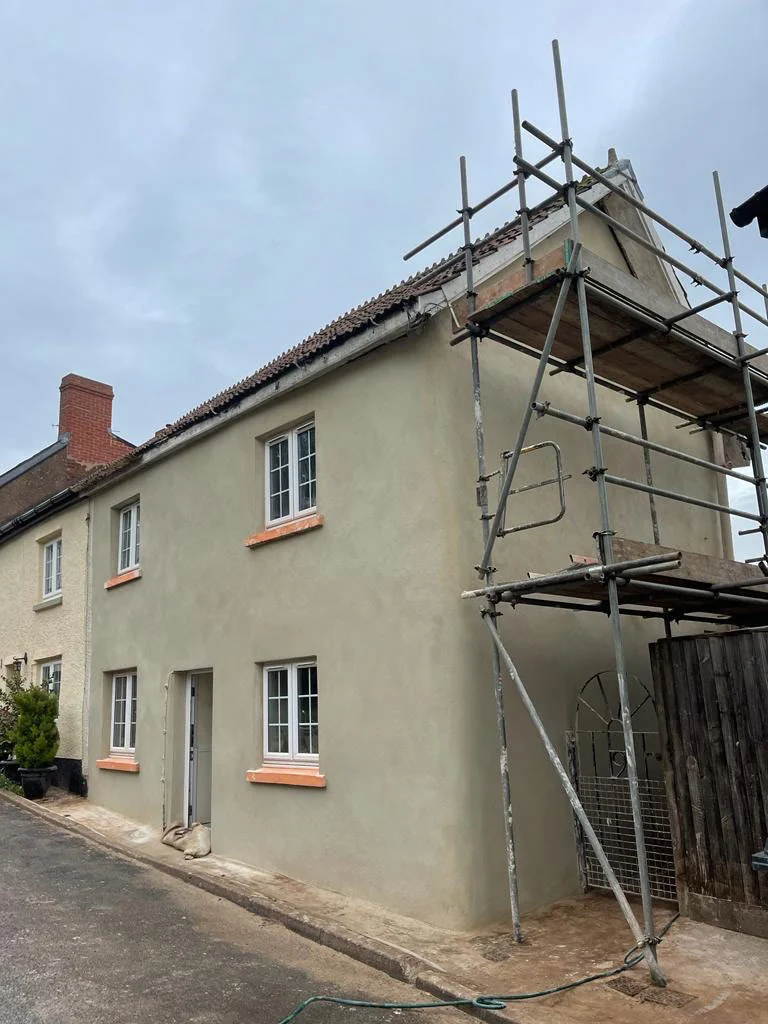
What is silicone render?
Silicone render is a factory-produced decorative finish containing silicone and polymer binders, mineral fillers and pigments.
It is normally applied as a thin topcoat over a prepared and reinforced basecoat. The completed system can provide a uniform textured finish without requiring exterior masonry paint.
EWI Pro’s EWI-075 technical information describes its silicone render as vapour-permeable, water-resistant and available in numerous colours and grain sizes. The manufacturer specifies it for application over a reinforced basecoat layer within compatible render-only or EWI systems.
Ceresit similarly describes CT 74 silicone render as having low water absorption and high vapour permeability.
Silicone render therefore should not automatically be described as an impermeable coating. Its suitability still depends on the complete system and the wall underneath.
Is lime render always best for an old property?
Not automatically. Lime is often an appropriate starting point for traditional solid walls, especially where the existing construction relies on vapour-permeable materials. However, the property still needs to be inspected.
The survey should establish:
- Whether the wall is solid, cavity or another construction.
- What render, paint or coating is already present.
- Whether the existing finish is firmly bonded.
- Whether damp, salts or persistent staining are visible.
- What repairs the masonry requires.
- How exposed the elevation is to wind and rain.
- Whether previous alterations have changed how the wall manages moisture.
An older property may already contain cement repairs, modern paint, replaced masonry or an extension built differently from the original house. Different elevations may therefore need separate consideration.
Can silicone render be used on an older house?
Sometimes, but it should be specified after the existing wall has been assessed.
A modern silicone finish must be supported by a compatible background and complete system. Applying it over loose render, unstable paint or unresolved damp will not correct those defects.
The existing finish may need to be removed before masonry repairs and a new reinforced render system are installed. In other cases, a sound background may be suitable for an approved preparation and overlay build-up.
The important question is whether the proposed system is compatible with the wall and its moisture behaviour. The decision should not be based only on the appearance of the silicone topcoat.
Breathability is not a simple yes-or-no test
“Breathable” is often used as if it separates all lime products from every modern render. The reality is more specific.
Lime render is porous and traditionally used where moisture movement through masonry must be maintained. Silicone finishes can also be vapour-permeable while resisting liquid water at the external surface.
The complete wall matters more than one product description. Render, basecoat, primer, insulation, paint and internal finishes can all influence how moisture moves through the construction.
A vapour-permeable topcoat cannot compensate for a failed damp-proof course, leaking gutter or inappropriate sealed layer elsewhere in the wall.
Which finish handles Sussex weather?
Properties around Worthing, Brighton and the South Coast can have exposed elevations, frequent wind-driven rain and periods of high humidity.
Silicone render is often chosen where the owner wants a water-repellent, coloured finish with relatively low routine maintenance. EWI Pro and Ceresit both identify water resistance alongside vapour permeability as features of their silicone finishes.
Lime render can also perform externally when the correct product, thickness, detailing and finish are specified for the property’s exposure. It requires suitable application and curing conditions, and any protective decoration must remain compatible with the lime system.
Neither material removes the need for working gutters, sound roof details, suitable sills and properly managed ground levels.
How do the appearances differ?
Lime render generally suits a softer, traditional finish. Minor variations in texture can form part of its character, particularly on period brick or stone buildings.
Silicone render creates a more uniform modern texture. It is factory-tinted and available in a wide range of colours, making it useful where the owner wants a consistent finish across a house, apartment building or commercial façade.
The desired appearance should be discussed alongside technical suitability. Choosing a material from a photograph without assessing the wall can lead to the wrong specification.
What about cracking and building movement?
No render should be expected to conceal ongoing structural movement.
Before either system is installed, cracks need to be inspected and their likely cause considered. Loose render should be removed, and defective masonry may require repair.
A silicone render system commonly uses reinforcing mesh embedded within its basecoat. Lime systems can also include compatible basecoats, mesh or multiple render layers where the specification requires them.
Reinforcement can help distribute normal stresses within the render system. It does not repair structural movement or make an unstable wall suitable for rendering.
Which requires more maintenance?
Maintenance depends on the finish, exposure, detailing and surrounding environment.
Silicone render is commonly selected for its resistance to water, dirt and biological growth. It should still be inspected and cleaned appropriately, particularly around sills, gutters, shaded elevations and areas close to vegetation.
Lime render may require compatible limewash, mineral paint or local maintenance over time, depending on the chosen system. Repairs should use materials that remain compatible with the surrounding lime work.
Owners of larger residential blocks and commercial properties should ask how future cleaning, access and local repairs will be managed before choosing a finish.
What should a rendering quotation explain?
A useful quotation should identify more than the name of the topcoat. It should explain:
- The existing wall construction and condition.
- Whether old render or paint will be retained or removed.
- How cracks, loose areas and masonry defects will be treated.
- The proposed render build-up.
- Why lime or silicone has been recommended.
- The primer, basecoat, mesh and finish where applicable.
- How windows, rooflines, pipes and ground-level details will be handled.
- The required curing and weather protection.
- Any maintenance guidance for the completed finish.
This gives homeowners and commercial clients a clear basis for comparing different proposals.
Choosing a render system in Sussex
Lime and silicone render both have valid uses. Lime is commonly selected for traditional masonry where compatibility and moisture movement are priorities. Silicone render provides a modern, coloured and water-repellent finish within a properly prepared system.
Pro Rend installs lime, silicone and other render systems for residential and commercial properties across Worthing, Brighton, Hove and surrounding Sussex towns.
See our rendering services or contact Pro Rend Sussex to arrange an assessment and discuss which render build-up is appropriate for your property.